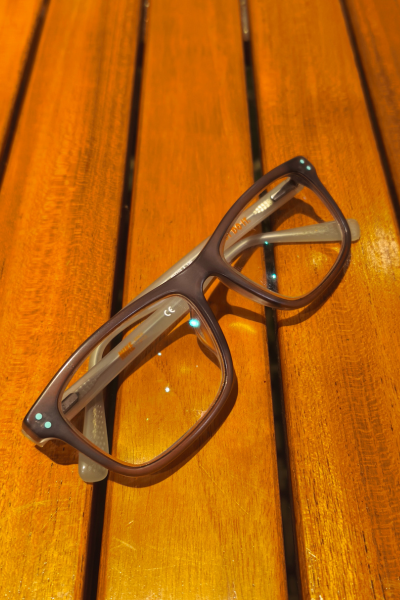
A family I worked with recently ran into a problem with their eight-year-old son and his glasses. He’s a PDA kid who’d been wearing glasses since he was two, so this wasn’t a new expectation or something he’d historically resisted. Suddenly, he’d started refusing to wear them, and when his parents tried to talk with him about it, he increasingly shut down.
These weren’t ordinary lenses. They were expensive specialty lenses prescribed to help keep his vision from getting worse, so his parents understandably felt like wearing them wasn’t optional. They started doing what most of us would probably do in that situation: “You need to wear your glasses. You have to keep them on.”
There was another message in the mix, though, because the lenses were also really expensive. His parents had understandably emphasized that he needed to be careful with them, especially when he was playing. So the message reaching this eight-year-old nervous system was essentially: “You have to wear your glasses. You have to keep them on. And you have to make sure you don’t scratch them.”
For a child with a PDA nervous system, that’s a lot of demand packed into one small pair of glasses. His parents were trying to protect his eyesight and teach him to take reasonable care of something valuable, but he was experiencing an increasing amount of pressure around something that was literally sitting on his face all day. The more they emphasized that he had to wear them, and not damage them, the less able he seemed to be to do it.
When they initially asked what was wrong, he told them he didn’t like the way they looked. His parents responded creatively, showing him examples of boys wearing glasses and offering to get him frames in a different color or shape. Those were perfectly reasonable suggestions, but they didn’t solve the problem because they still didn’t understand all of it.
When his mom reached out to me, I encouraged her to slow everything down. Instead of trying harder to convince him to wear the glasses, we needed to get curious about what was making wearing them difficult. “Not liking the way they looked” was useful information, but it might not be the whole story or the part that we could reasonably solve.
This is especially important with PDA kids because the conversation about a demand can become another demand. We can ask so many questions, offer so many solutions, and provide so many reasons that eventually the child experiences the entire interaction as pressure. Once their nervous system detects enough threat to autonomy, we’re unlikely to learn much more because they may move into fight, flight, freeze, or shutdown.
So his parents backed off and gave the problem some room. They kept listening without immediately trying to steer him toward the outcome they needed. Eventually, another piece of the story emerged.
He’d heard all those reminders about how expensive his glasses were and how important it was not to scratch them. He knew damaging them would mean his parents might have to spend a lot of money replacing or repairing them. And he’d figured out an extremely effective way to make sure that didn’t happen: he stopped wearing them.
Once we understood that, his behavior made perfect sense. He wasn’t simply refusing because he was a PDA kid who didn’t like being told what to do. He was overwhelmed by competing demands and trying to solve a real problem with the tools available to an eight-year-old.
He had to wear the glasses, but he also had to keep them safe. Wearing them while running, climbing, wrestling, and generally being a little kid increased the possibility that he’d scratch them. Taking them off eliminated that possibility entirely.
The solution he’d developed for one problem was unfortunately creating another one. He also needed to protect his eyesight, while he needed relief from the responsibility and pressure he’d come to associate with the glasses. Once everyone understood both concerns, they finally had something they could actually solve together.
His parents changed the message. They started telling him, “Buddy, it’s okay if your glasses get scratched. Really. You’re a kid. Glasses get scratched. We can handle that.”
They could also own their part in how the problem developed: “I think we talked so much about keeping your glasses safe that we accidentally made you feel like you had to keep them perfect. That was too much responsibility for us to put on you. Your job is to be a kid and wear your glasses, and we’ll handle what happens if they get scratched.”
Notice how much demand disappears from that interaction. He no longer has to wear the glasses, preserve them perfectly, remember how expensive they are, worry about costing his parents money, and manage their anxiety about his eyesight all at the same time. His parents are taking some of that responsibility back.
One of my favorite questions to hold in mind when a child’s behavior seems baffling is, “What problem might this behavior be solving?” We may not get the answer immediately, especially once a child is already overwhelmed. But simply holding the question changes how we respond while we wait for the answer.
That’s so often where the real shift happens with PDA kids. When adults stop piling pressure onto a nervous system that’s already telling us it can’t manage what we’re asking, we create enough safety and space to understand what’s getting in the way. From there, we have a much better chance of finding a solution that works for everyone.
* * *
Click the button below and schedule a free, 15-minute call.
We’ll discuss how we may be able to help.